
← Back

Market-led product

Business programme · for product and leadership teams · 4–6 months.

Building a product is easy today, especially with AI. Selling it is much harder. The most common mistakes are starting from features and a hunch that “it should sell” instead of the customer's pain – and building too many products at once.

The programme tests your product in the market through pilot sales: we talk to real prospects, measure their commitment and feed what we learn back into the product plan.

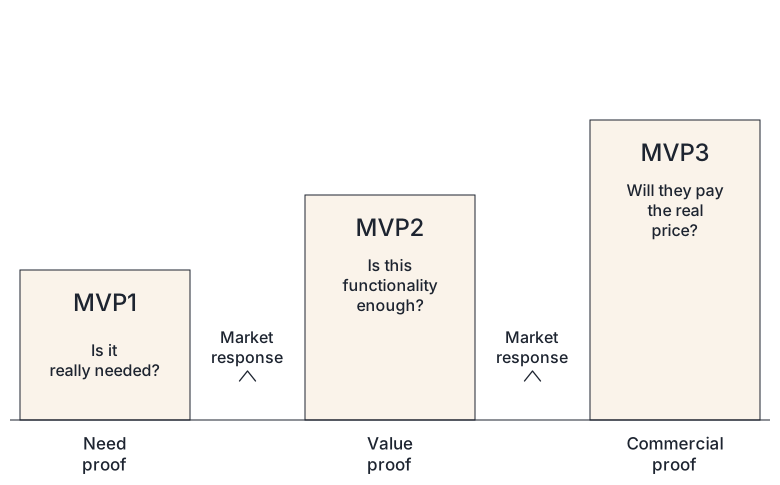
The product evolves through MVP1 → MVP2 → MVP3 cycles, and each one must deliver clear evidence: that the solution is genuinely needed, that it does enough, and that customers will pay a real price for it. Along the way you get pricing, a pitch, a demo, a marketing foundation and the beginnings of a sales team.

Your team builds the product. My job is to bring in the market response: to test what the market actually buys and help you decide when the product is ready to go to market.
How we validate the product

Product cycles MVP1, MVP2, MVP3: need, value and commercial proof

01

Initial offer

ICP and pains → MVP1
  • We start from the customer's pain, not from features
  • Product guidelines in the customer's own words, and an indicative price
  • For every MVP: what we're testing and what would count as a “no”
02

Pilot sales

Controlled sales → Market response
  • Conversations with real prospects
  • We measure commitment, not interest
  • Market response feeds back into the product plan
03

Cycles to market

MVP1 → MVP2 → MVP3
  • At least three cycles until the product sells
  • Along the way: pricing, pitch, demo and marketing
  • Each cycle ends with proof – of need, of value, of commercial viability

Is this for you?

  • You have a product idea or an MVP, but you're not sure the market will pay for it.
  • You're building several products, but none of them sells well enough.
  • Your product team works on instinct because real market response is missing.